Event Recap
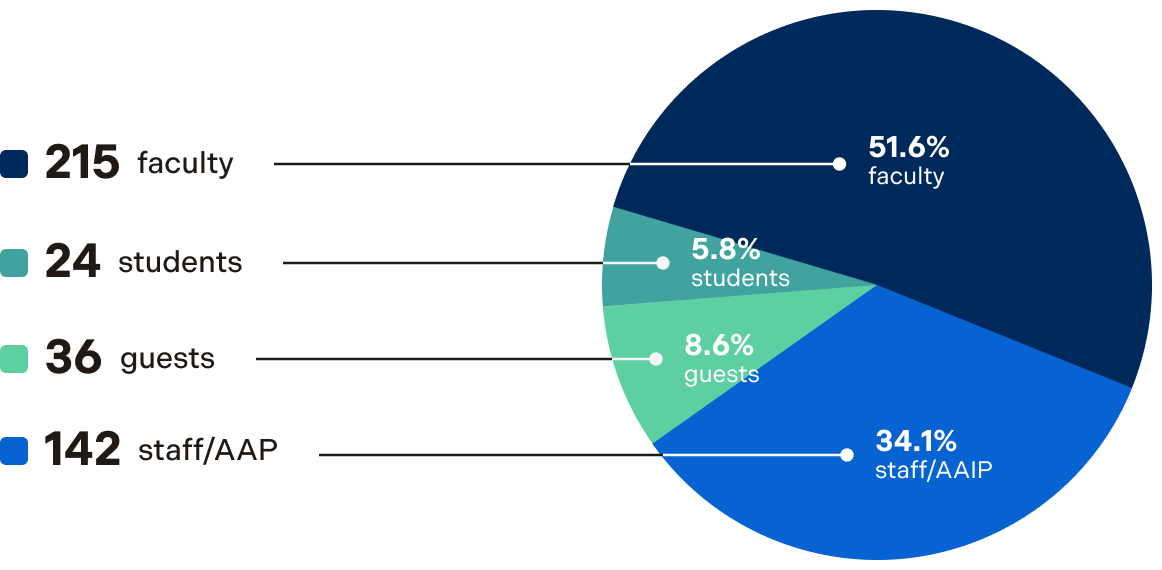
Three critical issues in higher education guided the 2024 TLISI program: the challenges and opportunities of artificial intelligence, dialogue and free speech on college campuses, and designing experiential learning opportunities. Keynote speakers and plenaries, invited workshop leaders, faculty and student panels, and practical workshops speaking to these themes underscored Georgetown’s commitment to understanding and shaping the evolving landscape of higher education. 417 faculty, staff, graduate student instructors, and guests from neighboring institutions attended TLISI on our hilltop campus and participated virtually throughout the week.
We’d like to again thank the entire Georgetown community for joining us at TLISI. The complete event report is available below, as are recordings of keynotes and workshops/sessions.

Plenaries and Keynotes

FACULTY PANELISTS EDILMA YEARWOOD, ADAM ROTHMAN, JEREMY KOONS, AND UNDERGRADUATE STUDENT CHANTAL LI (SFS ’25)
Panel on Georgetown’s Race, Power & Justice Course Pilot
CNDLS Executive Director Edward Maloney welcomed participants to TLISI 2024 before handing it off to a moderated panel with faculty and students who piloted Georgetown’s new Race, Power & Justice seminar, part of the new Pathways to Social Justice curriculum. They, along with one student who took the class, shared their experiences and lessons learned from this innovative 1-credit course that all entering Georgetown students will take starting Fall 2024.

jeanine turner, PhD
Being Present: Promoting Intentional Dialogue at Georgetown in a Post-Audience World
Digital devices, hybrid working and learning environments in response to the pandemic, and communication platforms have provided great flexibility and have reshaped the way we interact. In many ways, the pandemic has accelerated digital demands on our time and created a focus on efficiency rather than reflection and dialogue. This virtual session described a framework that recognizes the outside pressures that we face to help us to be more intentional in the way we are present with one another and work towards co-creating the types of environments that promote dialogue and understanding.
Turner’s book on this topic, Being Present: Commanding Attention at Work and at Home by Managing Your Social Presence (Georgetown University Press 2022) provides strategies for addressing the challenges of engaging attention in a world of digital devices, earning a 2022 Gold Medal Axiom Publishing Award given to promising business titles.
This workshop was not recorded.

Suzanne Nossel, JD
Dare to Speak: Defending Free Speech on College Campuses
Suzanne Nossel joined us for a conversation with Georgetown Provost Robert Groves, who contextualized our campus for a discussion around free expression issues. Following the back and forth conversation with Provost Groves, the conversation opened up to include TLISI participant questions.
Nossel is the Chief Executive Officer of PEN America, the leading human rights and free expression organization and is a leading voice on free expression issues in the United States and globally. She is author of Dare to Speak: Defending Free Speech for All.

Cal newport, phd
Teaching and Learning with AI: A Conversation with Cal Newport and Eddie Maloney
Building on the many conversations at Georgetown about generative AI and how it is transforming teaching and learning, Georgetown Professor Cal Newport, Provost’s Distinguished Associate Professor of Computer Science, and CNDLS Executive Director Edward Maloney offered a Q&A style keynote responding to questions around AI on Georgetown’s campus and in higher education more broadly. Cal Newport is the author of eight books, including Slow Productivity, A World Without Email, Digital Minimalism, and Deep Work.


New!
Roundtable Discussions
Facilitated roundtable discussions created opportunities for faculty and staff to learn about new initiatives across Georgetown in a casual, conversational setting. Roundtable topics included:
- Building Community of Practice, Trust, and Expression in Online Courses
- Considering the Ethics of Al
- Georgetown Dialogues Initiative
- Difficult Discussions in the Classroom
- The Restorative Justice-friendly University Classroom
- Sustainability Education
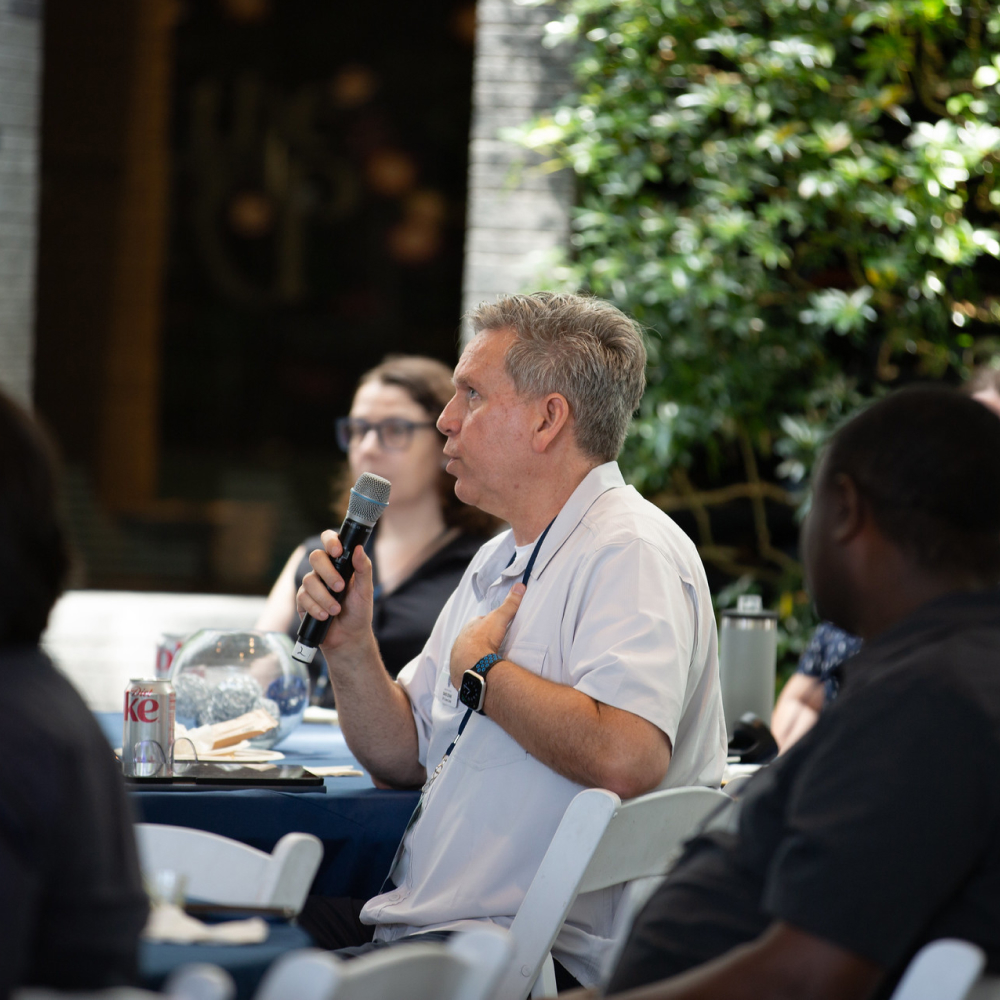
Popular Sessions

Artificial Intelligence
Learning to Live with AI : Enhancing Writing and Critical Thinking Across the Disciplines
J Palmeri, Sarah Jane Grizi
AI Use Cases in Teaching Across Georgetown University
Laura March, Purna Gamage, Kim Grimmick, James Hickman, Toni-Lee Sangastiano, Elissa Redmiles, Joe Vallone
Evolving Your Relationship with AI by the Creative AI Academy
Tony Jones, Dominik Heinrich
Dialogue and Free Speech
Productive Tensions in the Classroom: Pedagogical Approaches and Strategies for Facilitating Challenging Conversations
Joselyn Lewis and Doireann Renzi
In Your Shoes: An Immersive Dialogue Workshop
Ijeoma Njaka, Ryann Craig, and Rachel Gartner
Applied Theater Interventions in the Classroom and Beyond
Georgetown’s Racial Justice Enactors — Antonio D. Lyons, Justin Gordon, and Leslie Jones


Experiential Learning
Our City is Our Classroom: Experiential Learning Integration at Georgetown
Susannah McGowan, Doireann Renzi, Melissa Bernard, Randy Bass
Learning by Doing: Faculty Perspectives on Experiential Learning in Online Environments
Zhuqing Ding, Janet Gomez, John Trybus, Qi Chen, Jim Freericks, Babak Zafari, Carole Hemmelgarn
Embodied Education for Ecological Belonging
Ashanee Kottage, Akanksha Sinha
Attendance
417 faculty, staff, graduate student instructors, and guests from neighboring institutions attended TLISI on our hilltop campus and participated virtually throughout the week.
53 CNDLS staff and graduate associates ran sessions, coached PODS teams, and staffed the event. Various session types and modalities, along with social gatherings, good food, and fun, enabled a range of participation.
Overall
205
total university units were represented at TLISI.
96
departments were represented by faculty attendees at TLISI.
Modality
“It’s really the state-of-the-art conference of its kind, and an invaluable resource for all of Georgetown.”
TLISI attendee
Survey Responses
Satisfaction
Of faculty survey respondents,
95%
reported TLISI gave me opportunities to build community with others;
90%
reported TLISI inspired them to make some changes in their courses;
87%
reported TLISI helped me improve as an instructor;
86%
reported TLISI provided me with concrete, applicable information.
Reasons for attending
Building Community

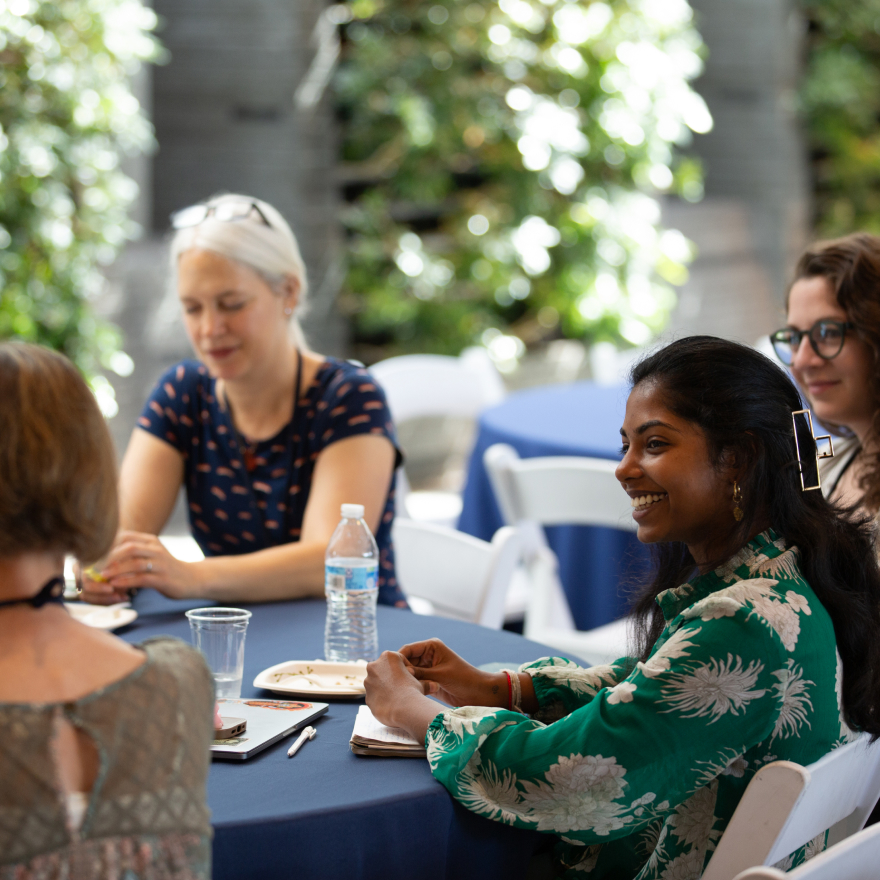
Attendees connected during two social hours, one of which was held on the Baker Family Terrace, the Red House’s new outdoor event space.
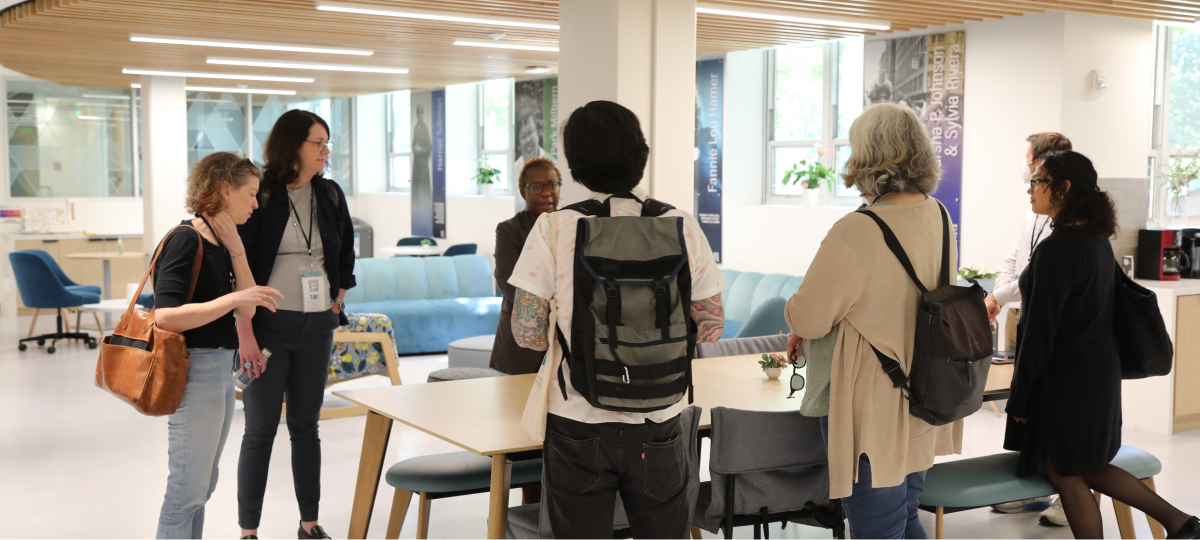
Attendees toured the new Office of Student Equity and Inclusion (OSEI) space on the lower level of HFSC. Home to five flagship centers and programs, this hub was meticulously designed through intentional collaboration across all OSEI units, with engagement from their communities.
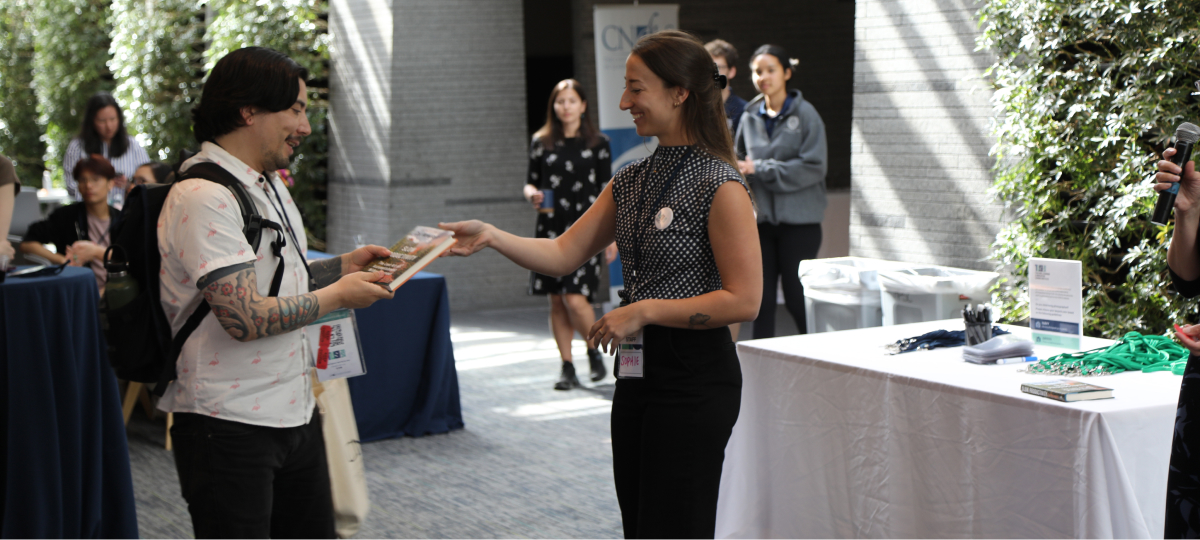
Book raffle winners received copies of books by our keynote speakers and other leading authors in the Scholarship of Teaching and Learning.
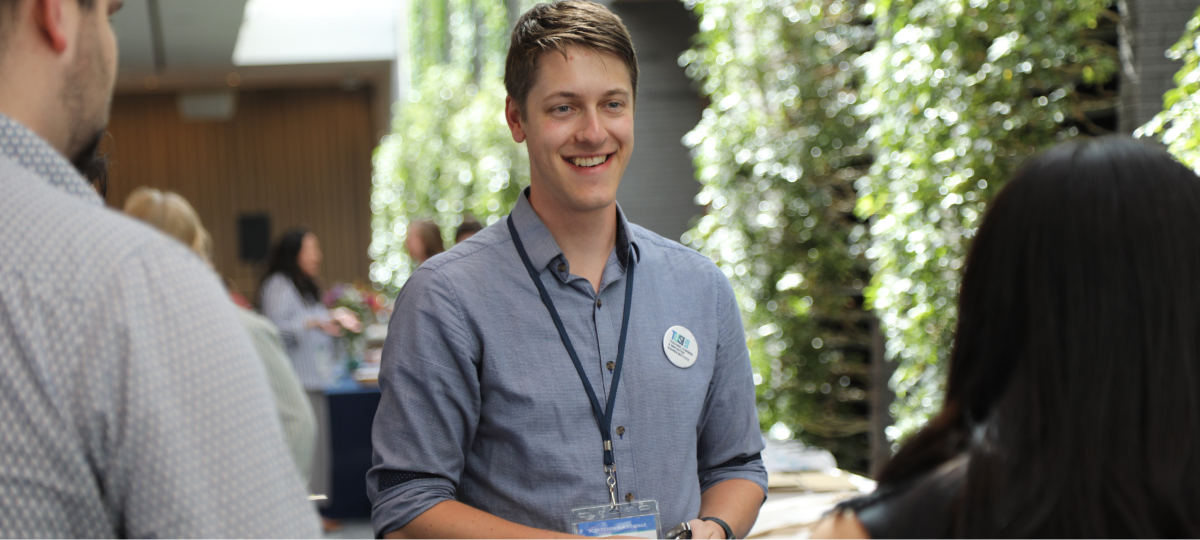
David Strout, Maker Hub Manager, hosted a button-making demo session and shared information about how to get involved with the Maker Hub during the academic year.


Productive Open Design Spaces
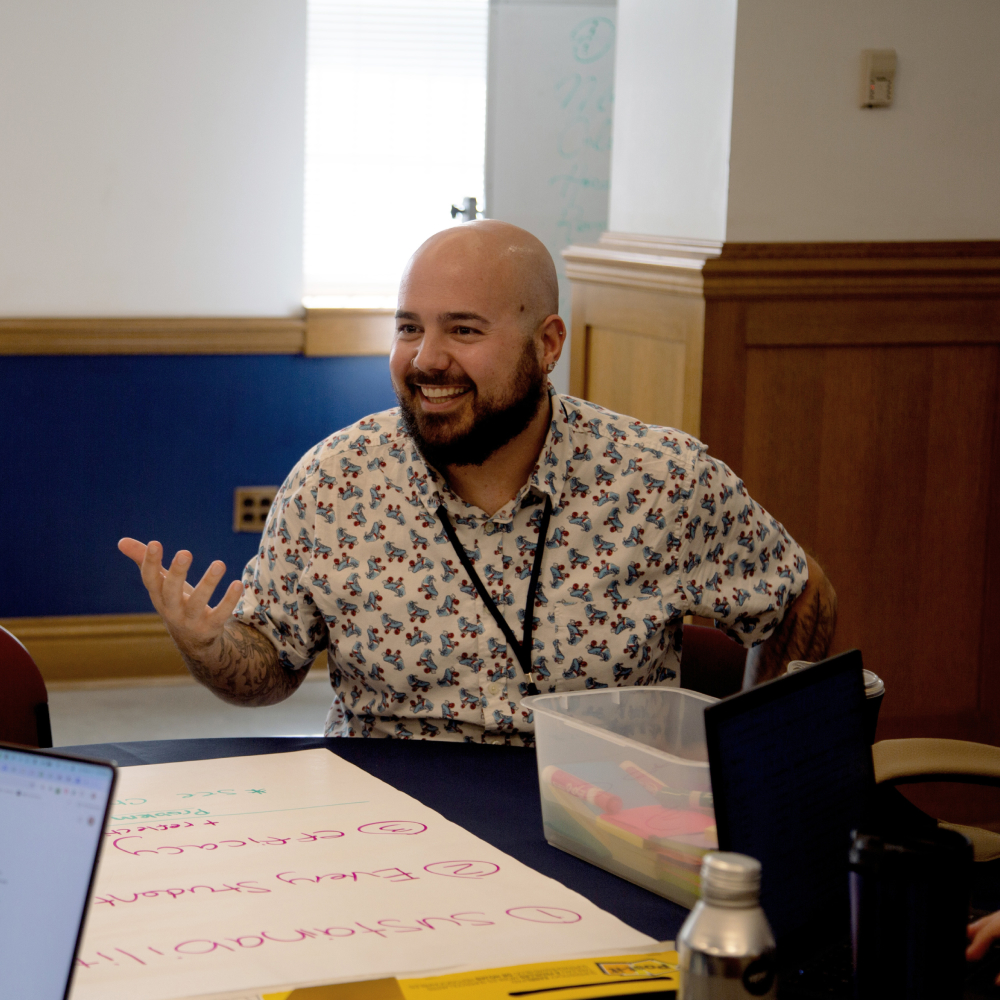
PODS (Productive Open Design Spaces) offers teams from across the university the opportunity to ideate, iterate, and create together during the TLISI week. CNDLS coaches use a human-centered design approach to support teams in tackling curriculum, course, and program redesign.
The 2024 participating teams included:
- Broken Connections: Managing Human-Environment Linkages Under a Changing Climate
- Curricular Redesign for the MA Program in Engaged and Public Humanities
- Design Thinking at the Intersection of Engaged Scholarship and Learning at the CSJ
- Managing Research Enterprise at Georgetown
- MS in Climate, Environment and Health
- MSB: What Are We Doing Here?
- Restorative Georgetown: A Rapid Response Plan for Times of Crisis
- Science for All Faculty Learning Community
- Tackling Wicked Problems at the Intersection of Climate and Health
Recorded Sessions
May 20, 2024
AI Use Cases in Teaching Across Georgetown University
Laura March, Purna Gamage, Kim Grimmick, James Hickman, Toni-Lee Sangastiano, Elissa Redmiles, Joe Vallone
Trauma-Informed Practices for Teaching and Learning
Joselyn Lewis, Nafisa Isa, Caitlin Gunn
Learning by Doing: Faculty Perspectives on Experiential Learning in Online Environments
Zhuqing Ding, Janet Gomez, John Trybus, Qi Chen, Jim Freericks, Babak Zafari, Carole Hemmelgarn
Student Perspectives On Learning Together
Jordan Davis, Billie Abdullah, Sara Hewitt, Isabel McHenry, Joan Riley
Toward a Framework for Teaching AI, Leadership & Collaboration in a Professional Education Context
Wendy Zajack, Melissa Netzband, Frederic Lemieux, Uwe Brandes, Linda Dunn
May 21, 2024
Learning to Live with AI: Enhancing Writing and Critical Thinking Across the Disciplines
J Palmeri, Sarah Jane Grizi
Our City is Our Classroom: Experiential Learning Integration at Georgetown
Susannah McGowan, Doireann Renzi, Melissa Bernard, Randy Bass
CNDLS Review of Piloted Tools to Advance Experiential Teaching and Learning with Technology
Jason Kramer, Maria Getahun, Peter Janssens, Sabrina Wang
Melissa Netzband, Jess O’Toole
Digital Research & Innovation Faculty Panel
Suzanne Chase, Benjamin Harbert, Michelle Wang, Nicoletta Pireddu
May 22, 2024
Full Time Non-Tenure Line Faculty (FTNTL) Town Hall
Astrid Weigert
Real-World AI Scenarios in Academic Integrity
Ali Whitmer, Alex Theos
Teaching Georgetown’s History of Slavery, Memory and Reconciliation
Adam Rothman, Bernard Cook, Mary Beth Corrigan, David Ebenbach, Molly Chehak
Embodied Education for Ecological Belonging
Ashanee Kottage, Akanksha Sinha
Evolving Your Relationship with AI by the Creative AI Academy
Tony Jones, Dominik Heinrich
TLISI 2024 was made possible by our co-sponsors & partners:
The Red House | Georgetown Libraries | Georgetown University in Qatar | Learning, Equity, Access, and Pedagogy Initiative | GUWellness | The Doyle Engaging Difference Program